
How to Upgrade From Halogen to LED?

Replacing Halogen Downlights with LED: How to Upgrade?
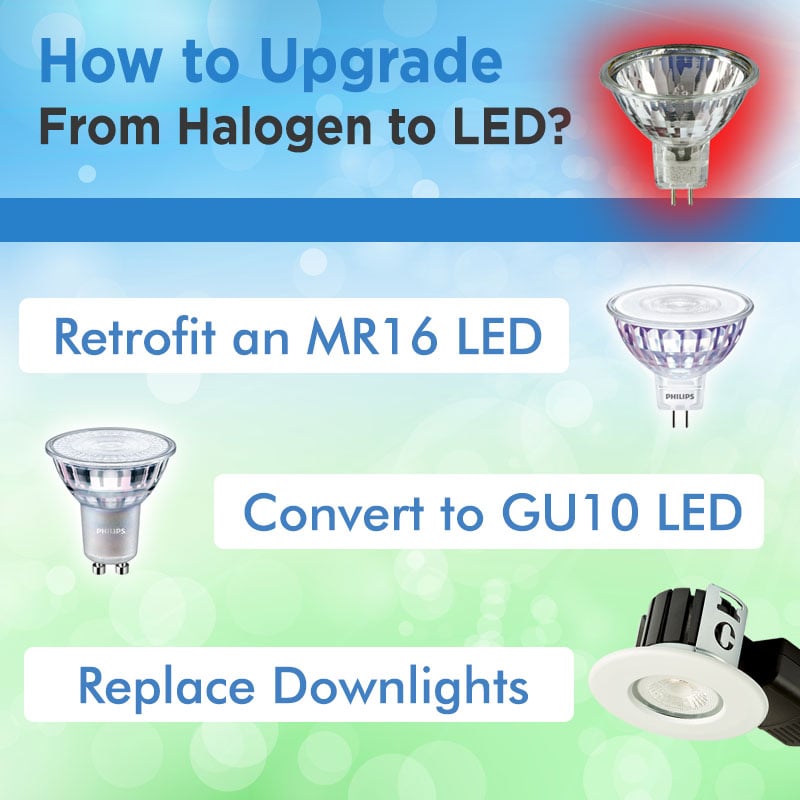
With the ban on halogen lights now firmly in place from 2016, there are still lots of halogen and incandescent lamps out there wasting energy and draining the earth’s resources. Halogen lighting, once a common traditional option, is now being phased out in favor of more efficient alternatives. These energy-hungry relics from a distant past need to get upgraded to LED. Upgrading to LED not only reduces energy waste but also helps decrease reliance on coal fired energy, lowering environmental impact. LED is 90% more efficient and lasts for 10 times longer. By switching to LED, you will save money on your energy bills over time. There are three main options for upgrading from halogen lights to LED, and choosing the right option for you depends on the type of downlights and halogen lamps you’ve currently got.
Introduction to LED Upgrade
Upgrading to LED lighting is one of the most straightforward and cost-effective ways to enhance your home or business’s lighting while significantly reducing energy consumption. As halogen bulbs are phased out, LED lights have become the go-to solution for anyone seeking better energy efficiency, lower running costs, and improved lighting quality. The LED lighting industry has made remarkable strides, offering a wide range of LED bulbs and LED lamps to suit every application—from spotlights to general household lighting. Whether you’re looking to replace a single halogen bulb or overhaul your entire lighting system, switching to LED lighting means you’ll benefit from longer-lasting, more reliable lights that are kinder to both your wallet and the environment. With various LED lamps available, now is the perfect time to make the switch and enjoy the advantages of modern lighting technology.
Understanding Your Current Halogen Bulb
Before making the switch to LED bulbs, it’s essential to understand your existing halogen bulb. Halogen bulbs have been a popular choice for many years, but they come with several drawbacks. They consume a lot of energy, produce significant heat, and have a relatively short lifespan. To upgrade to LED bulbs, you need to know the type of halogen bulb you have, its wattage, and its base type. A GU10 cap has 2 stubby pins and operates on mains voltage.
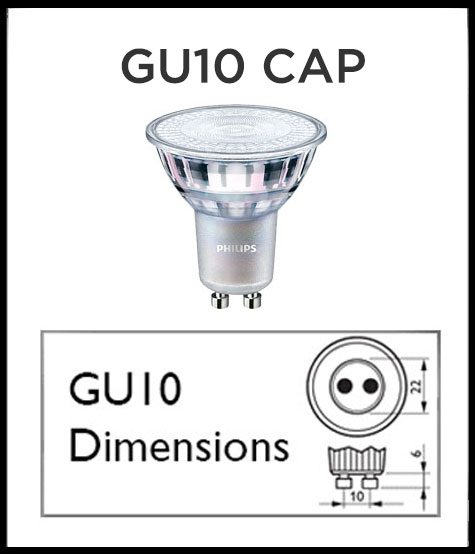
Be sure to check the product packaging for wattage and lumen information, as this will help you select the right LED replacement. For instance, if you are replacing your old halogen bulb with a GU10 base, you’ll need an LED bulb with the same base type to ensure compatibility. Understanding these details will make your transition to an LED light bulb smooth and hassle-free.
Halogen Downlights Limitations
While halogen downlights were once a popular choice for their crisp, focused light, they come with several significant drawbacks compared to today’s LED downlights. Halogen downlights have a relatively short lifespan, often requiring replacement after just 1,000 to 2,000 hours of use, which can be inconvenient and costly over time. They also consume much more energy than LED downlights, leading to higher electricity bills and a greater environmental impact. Another major limitation is the amount of heat halogen downlights produce, which not only wastes energy but can also pose a safety risk, especially in ceiling installations. Replacing halogen downlights can be a hassle due to their placement, making maintenance more challenging for homeowners. Upgrading to LED downlights eliminates these issues, offering a safer, more efficient, and longer-lasting lighting solution.
Benefits of Upgrading to LED Bulbs
Upgrading to LED bulbs offers numerous benefits that make it a worthwhile investment. LED bulbs are incredibly energy-efficient, using up to 90% less energy than halogen bulbs. LEDs produce visible light more efficiently than halogen bulbs, which waste more energy as heat. This significant reduction in energy consumption translates to lower electricity bills and a smaller carbon footprint. LED bulbs can provide the same amount of illumination as halogen bulbs while using less energy. Additionally, LED bulbs have a much longer lifespan, lasting up to 50,000 hours compared to the 1,000 to 2,000 hours of halogen bulbs. This means fewer replacements and less maintenance over time. LED bulbs also produce minimal heat, reducing the risk of fires and making them a safer choice for your home. Moreover, they are environmentally friendly, as they are free of toxic chemicals like mercury and lead, making them a greener option for lighting.
LED vs Halogen: Key Differences
When comparing LED bulbs to a halogen light bulb, several key differences stand out. First and foremost, LED bulbs are far more energy-efficient, consuming significantly less power than halogen bulbs. This efficiency not only saves you money on energy bills but also contributes to environmental conservation. In terms of lifespan, LED bulbs outlast halogen bulbs by a wide margin, offering up to 50,000 hours of light compared to the 1,000 to 2,000 hours of halogen bulbs. LED bulbs can provide the same brightness as a halogen light bulb while using less energy. Another critical difference is heat production; LED bulbs generate minimal heat, making them safer and more comfortable to use, whereas halogen bulbs can become very hot. Additionally, LED bulbs are free of toxic chemicals, making them a more environmentally friendly choice. When replacing a halogen light bulb with an LED, ensure the actual wattage of the LED matches the original halogen bulb to maintain compatibility and safety. Despite a higher upfront cost, LED bulbs prove to be more cost-effective in the long run due to their durability and energy savings.
Choosing the Right LED Replacement
Choosing the right LED replacement for your halogen bulb can seem overwhelming, but it’s crucial to get it right for optimal performance. Start by considering the wattage of your current halogen bulb and look for an LED bulb that offers the same or equivalent wattage to ensure safety and compatibility. Next, identify the base type of your halogen bulb, such as GU10 or MR16, to ensure compatibility with the LED replacement—this is especially important for spotlight bulbs, where matching the base is essential for proper fit and function. When selecting a new bulb, pay attention to color temperature; decide whether you prefer a warm, cool, or daylight color temperature to match your lighting needs. For a cozy ambiance, consider a warm white LED (less than 3,300 Kelvin), which is a popular choice for living spaces.
Consider whether you need dimming capabilities and check if the LED light bulb is dimmable. When upgrading, you can choose from various options such as LED replacements or an LED lamp, both offering improved energy efficiency and longer lifespan compared to traditional bulbs. Finally, evaluate the energy efficiency and lifespan of the LED bulb to ensure you’re making a cost-effective and sustainable choice. By taking these factors into account, you can confidently select the right LED replacement for your halogen bulb.
Transformer and VA Rating: What You Need to Know
When replacing halogen bulbs with LED bulbs, especially in low voltage lighting systems, understanding your transformer’s VA (volt-ampere) rating is crucial for a safe and successful upgrade. The VA rating indicates the maximum load your existing transformer can handle, which was originally matched to the higher power consumption of halogen bulbs. Since LED bulbs use much less power, it’s important to ensure that your transformer is compatible with the lower equivalent wattage of your new LED bulbs.
Using an incompatible transformer can lead to issues like flickering, poor performance, or even damage to your LED bulbs. In some cases, you may need to install a suitable LED transformer designed for the lower load and specific requirements of LED lighting. For peace of mind and safety, it’s always best to consult a qualified electrician who can assess your current setup and recommend the right LED transformer to match your new lighting.
Option 1 - Retrofit an MR16 LED
If you’re replacing low voltage MR16 50W halogens that have low voltage 12V transformers, the first and obvious option is to replace it with something like an MR16 LED. When replacing MR16 halogen bulbs, it is crucial to choose the correct type of LED lamps to ensure compatibility and optimal performance. Before replacing bulbs, always check the transformer's maximum load, which is determined by its apparent power (measured in VA) and maximum voltage. Transformers are used to convert high voltages to safe, low voltage levels for lighting, and exceeding the transformer's maximum wattage or VA rating is a safety concern. The maximum load relates directly to the total wattage of bulbs the transformer can support safely, so never exceed this limit. When switching to lower wattage light bulbs like LEDs, ensure you load safely and do not overload the transformer. Halogen transformers can generate significant heat, which may ignite combustible materials such as insulation batteries, but LEDs operate with much less heat, making them a safer option. LEDs work by using electrical current passing through a microchip to produce light, resulting in less heat compared to halogen bulbs.
These retrofit lamps should operate from your existing transformers. Because these particular LEDs operate on AC (Alternating Current) rather than DC (Direct Current) you don’t need to use a special LED driver. But this isn’t always the case as MR16 LEDs aren’t always universally compatible. This often results in you having to replace your transformers. But…You don’t find out that they’re not compatible with your transformers until they start flickering or randomly flashing. This happens more-so when you’re dimming them. Then its back to the drawing board which means replacing the old transformer with a new LED compatible one which would be the Varilight YT transformers.
This involves additional costs, more time and more messing about - which nobody wants. Another consideration is that if you do plan to dim them, you’re going to need to ensure that the LED, the transformer and the dimmer switch are all compatible with each other. The Varilight YT transformers combined with the Varilight V-Pro dimmer switches are compatible, as are the Philips MR16 LEDs. A winning combination! But you’ve now spent more on these items than you would with options 2 and 3.
Option 2 - Convert to GU10 LED
Again if you’re replacing low voltage halogen bulbs with LED but want to keep your existing downlights, you can convert them into mains voltage GU10 by ordering some basic GU10 lamp holders, a GU10 lamp holder with connector block and GU10 LEDs. Once the fitting is converted, you can simply replace the halogen bulb with a GU10 LED. This involves disconnecting the transformer and some re-wiring which should be done by a qualified electrician.
Option 3 - Replace Downlights with LED Downlights
Install brand new downlights, replacing halogen downlights with LED alternatives. When installing a new light, make sure to choose one that fits your needs and preferences. It is important to select the correct led fitting to ensure compatibility and optimal performance. This option opens up a whole new world of opportunities for you. You could either install new GU10 downlights or integrated LED downlights, each being a different type of light source. In short, integrated downlights have a built-in and non-replaceable LED light source, while GU10s are usually cheaper with a replaceable LED light source. GU10 LED downlights are not as good in terms of light output, life expectancy, or guarantee periods. Check out our sale items for our latest special offers on downlights, LED light bulbs, and more.
Replacing GU10 Halogen Bulbs with LED
This is easy and now straightforward to do because LED GU10 lamps can be swapped straight over without any wiring or transformers to consider. You can replace halogen GU10s with LED alternatives to improve energy efficiency and extend the lifespan of your lighting. When replacing your old bulbs, ensure they are properly disposed of at designated recycling locations. Halogen lamps should be disposed of in the same way as incandescent lamps, with attention to recycling waste glass. Here are some options for you to consider if you’re replacing your 50W halogen GU10s:
- Philips Master Value 4.9W GU10 - Ideal for mimicking the dimming effects of a halogen with the Dimtone version
- Philips CorePro 4.6W GU10 - A cost effective, non dimmable lighting option
- Aurora Ice 5W GU10 - Available in dimmable and non dimmable, it has a nice wide beam angle of 60 degrees
- View all of our high quality GU10 lamps here.
Dimmable LED Options
If you want to retain dimming functionality with your new LED bulbs, it’s essential to choose a dimmable LED light bulb that is compatible with your dimmer switch. Not all LED light bulbs are dimmable, so look for those specifically labeled as such. Dimmable LED light bulbs come in various types, including those with built-in dimming technology and those that require an external dimmer. When selecting a dimmable LED light bulb, ensure that it is compatible with your existing dimmer switch. Some dimmers designed for halogen bulbs may not work well with LED light bulbs, leading to flickering or limited dimming range. By choosing the right dimmable LED light bulb, you can enjoy customizable lighting and maintain energy efficiency in your home.
Disposing of Old Halogen Lamps
Proper disposal of old halogen lamps is essential to protect the environment and comply with local regulations. Unlike LED lamps, which are free from hazardous materials, halogen lamps can contain substances that require special handling. It’s important not to throw halogen lamps in your regular household waste or recycling bins. Instead, check with your local council or waste management authority for designated collection points or recycling facilities that accept halogen lamps. These facilities are equipped to handle and process halogen lamps safely, ensuring that any potentially harmful materials are managed responsibly. By disposing of your old halogen lamps correctly, you help reduce environmental impact and support the transition to safer, more sustainable LED lighting.
Maintenance and Safety Tips
To get the most out of your new LED lighting and ensure safe operation, a few simple maintenance and safety practices go a long way. Always switch off the power before handling or replacing any LED bulbs or lamps, and avoid touching the glass or electrical contacts to prevent damage or injury. Keep your LED bulbs and lamps clean by gently dusting them, which helps maintain optimal light output and energy efficiency. When upgrading from old halogen bulbs, double-check that your new LED bulb is compatible with the existing transformer and light fitting to avoid any safety concerns or performance issues. Consider the colour temperature and beam angle of your LED bulb to achieve the lighting effect you want in each room. By following these tips, you’ll enjoy the full benefits of LED lighting—brighter, safer, and more energy efficient—while minimizing the risks associated with improper installation or maintenance.
Another Better Option? Consider Energy Efficient Solutions
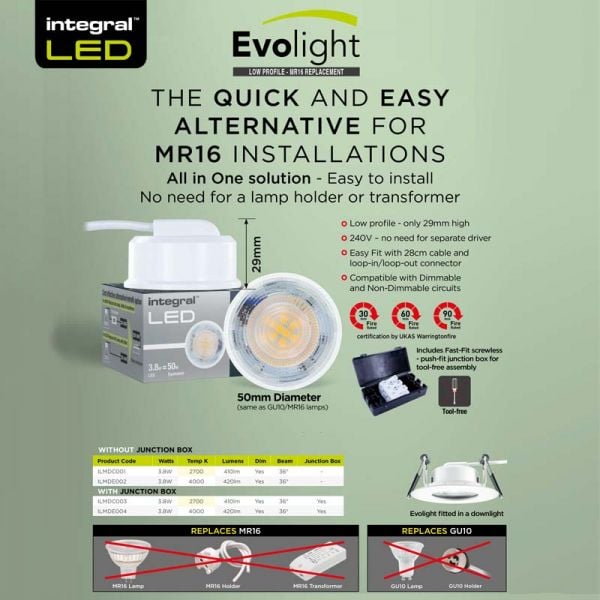
The Evolight from Integral offers another alternative to MR16, GU10 and integrated LED. The Evolight from Integral leverages advanced LED technology to provide a more efficient and longer-lasting lighting solution. These LED modules can be used to upgrade your existing halogen light downlights to LED. They come with a push-fit connector block that allows you to disconnect your transformer and wire them straight to the mains. The end result gives you a type of replaceable LED that operates like an integrated LED downlight.
Hybrid Downlights - The Best of Best Worlds!
Another new option which combines the integrated LED technology with a replaceable lamp, is the Ansell Prism XM. This integrated LED downlight has a replaceable LED module and replaceable driver. If the downlight ever fails you can replace the components rather than the entire downlight.

Need Further Help?
Get in touch with our downlight experts on: 01706 868343 or email: [email protected] and we'll be happy to assist you further.